Fitness statistics change depending on whether a survey measures exercise frequency, compliance with public health guidelines, gym memberships or participation in a particular sport. Those measures cannot be combined without checking the populations and definitions behind them.
CDC data describes adult aerobic activity, while fitness industry reports describe customers using facilities and equipment. Examining these sources separately gives a more reliable view of exercise across age groups and activities.
Key Takeaways
- The CDC reported 47.2% of US adults met aerobic activity guidelines during leisure time in 2024.
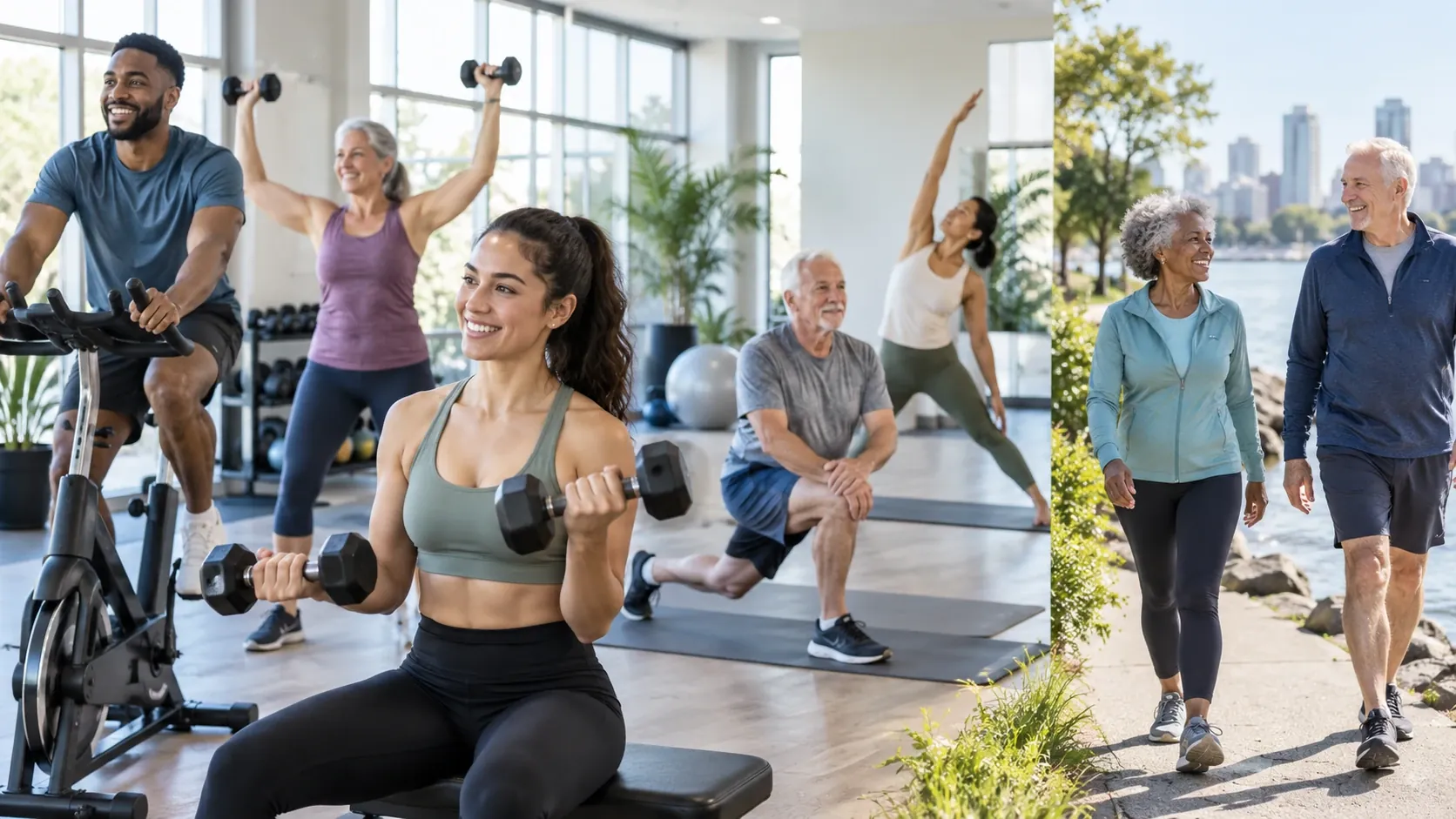
- The rate was 54.0% for adults aged 18–34 and 38.4% for adults aged 65 or older.
- The Health & Fitness Association reported 77 million US fitness facility members for 2024.
- Gym membership and exercise compliance are not equivalent measures.
Physical Activity by Age
| Adult age group | Meeting aerobic guidelines in 2024 |
|---|---|
| 18–34 | 54.0% |
| 35–49 | 49.8% |
| 50–64 | 44.6% |
| 65+ | 38.4% |
| All adults | 47.2% |
CDC, National Health Interview Survey 2024.
Source: CDC, NCHS Data Brief 555 (National Health Interview Survey 2024).
Why Participation Changes With Age
The CDC figures show progressively lower rates across older age groups, but they do not explain the causes for every individual. Access, disability, competing commitments and health circumstances can all influence exercise participation.
Differences by Sex
The CDC reported 52.3% of men and 42.4% of women met aerobic guidelines during leisure time in 2024. This is a difference in measured activity attainment, not proof of different interest in exercise or commercial fitness services.
Source: CDC, NCHS Data Brief 555 (National Health Interview Survey 2024).
Exercise Types Within Fitness Facilities
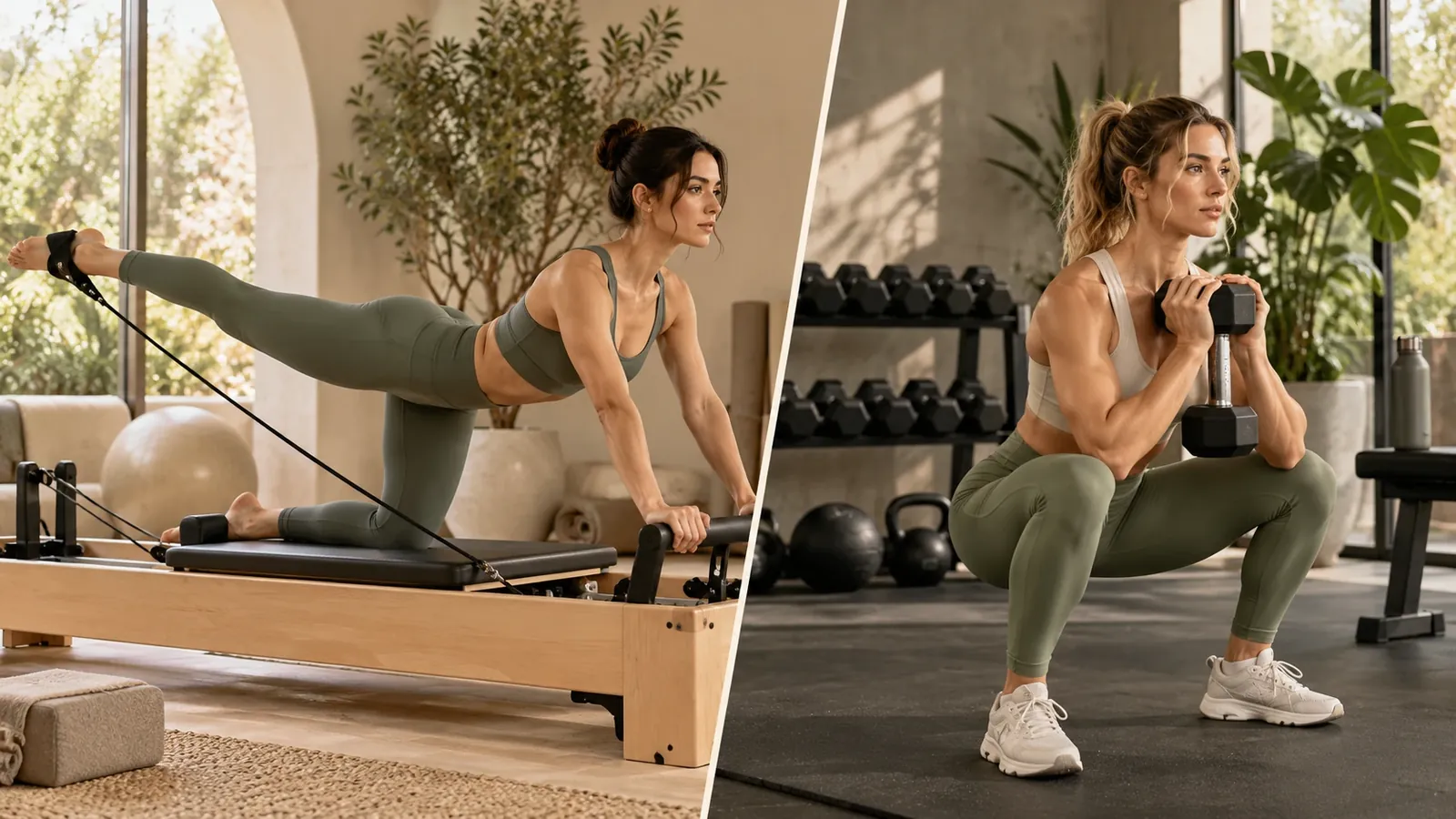
The Health & Fitness Association reported treadmill use among 43.4% of facility members in 2024, followed by dumbbells or free weights at 32.1%, the equipment at the centre of Pilates vs strength training. Yoga participation reached 21.8%, while Pilates was 8.1%; how the two practices differ is compared in Pilates vs yoga. For members budgeting for studio classes, the Pilates class cost calculator compares drop-ins, packages and memberships.
Source: Health & Fitness Association, 2025 consumer data release. Members can use several activities, so shares do not add to 100%.
Why Facility Figures Need a Different Denominator
These activity shares refer to fitness facility members, not all Americans. One member can also appear across several activities, so adding percentages together would not produce a valid unduplicated participation estimate.
Gym Membership and Nonmember Exercise
HFA estimated 77 million US fitness facility members in 2024, equal to 24.9% of Americans aged six and older. The wider customer population, including nonmembers accessing facilities through other arrangements, was reported at nearly 96 million. Booking marketplaces are one such arrangement, covered in our ClassPass business model analysis, while many studios run on the software examined in our Mindbody business model breakdown, with options compared in ClassPass alternatives and Mindbody alternatives. Marketplace users can check their ClassPass cost per credit and per class.
A person can meet aerobic guidelines through walking, cycling or running without ever visiting a gym. Home equipment and wearables serve that group in different ways, as our Peloton business model and WHOOP business model analyses show. Free apps are another route, compared in our guides to free fitness apps and fitness apps for women. Conversely, membership alone does not establish exercise frequency or whether a member meets recommended activity levels.
Participation Beyond Gyms
The Sports & Fitness Industry Association estimated that 247.1 million Americans aged six and older took part in at least one tracked activity in 2024. This broader measure includes sports and recreation, and should not be compared directly with CDC adult aerobic guideline compliance.
FAQs
What Percentage of US Adults Meet Aerobic Activity Guidelines?
The CDC reported 47.2% in 2024 for leisure-time aerobic activity among adults aged 18 and older. The figure reflects a defined public health threshold and does not require a gym membership or commercial fitness purchases.
Which Age Group Is Most Active According to the CDC?
Adults aged 18–34 recorded the highest measured attainment at 54.0% in 2024. That figure is specific to the CDC's aerobic guidelines and does not establish which exercises the group prefers or how often its members attend gyms.
How Many Americans Have Fitness Memberships?
HFA estimated 77 million US fitness facility members in 2024, representing approximately 24.9% of Americans aged six and older. The population differs from CDC adult surveys, and membership is not necessarily evidence of regular participation.
Conclusion
Exercise behaviour is best assessed with the measurement appropriate to the question. Public health guidelines, fitness memberships and specific sports participation each offer useful but distinct evidence.