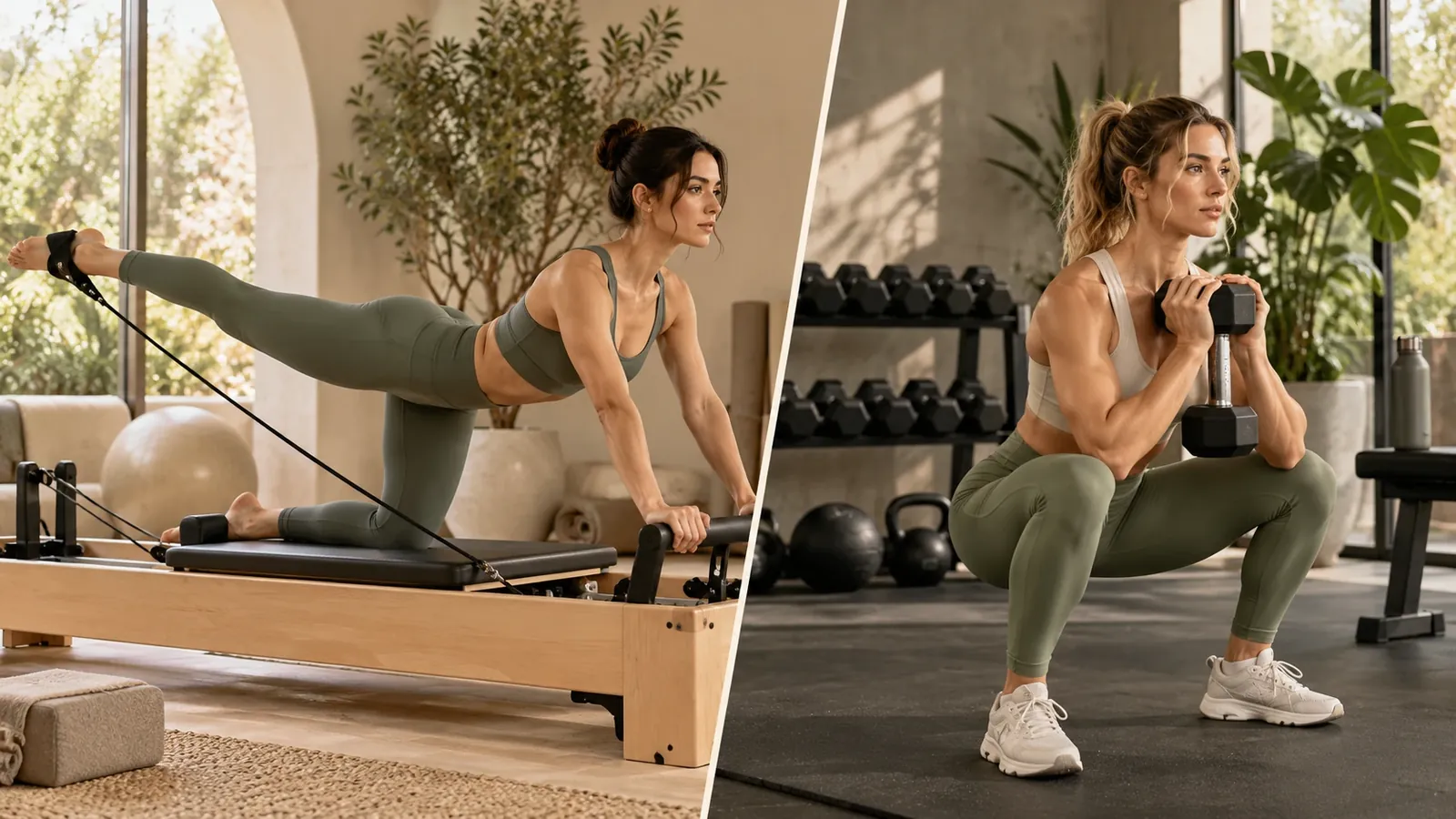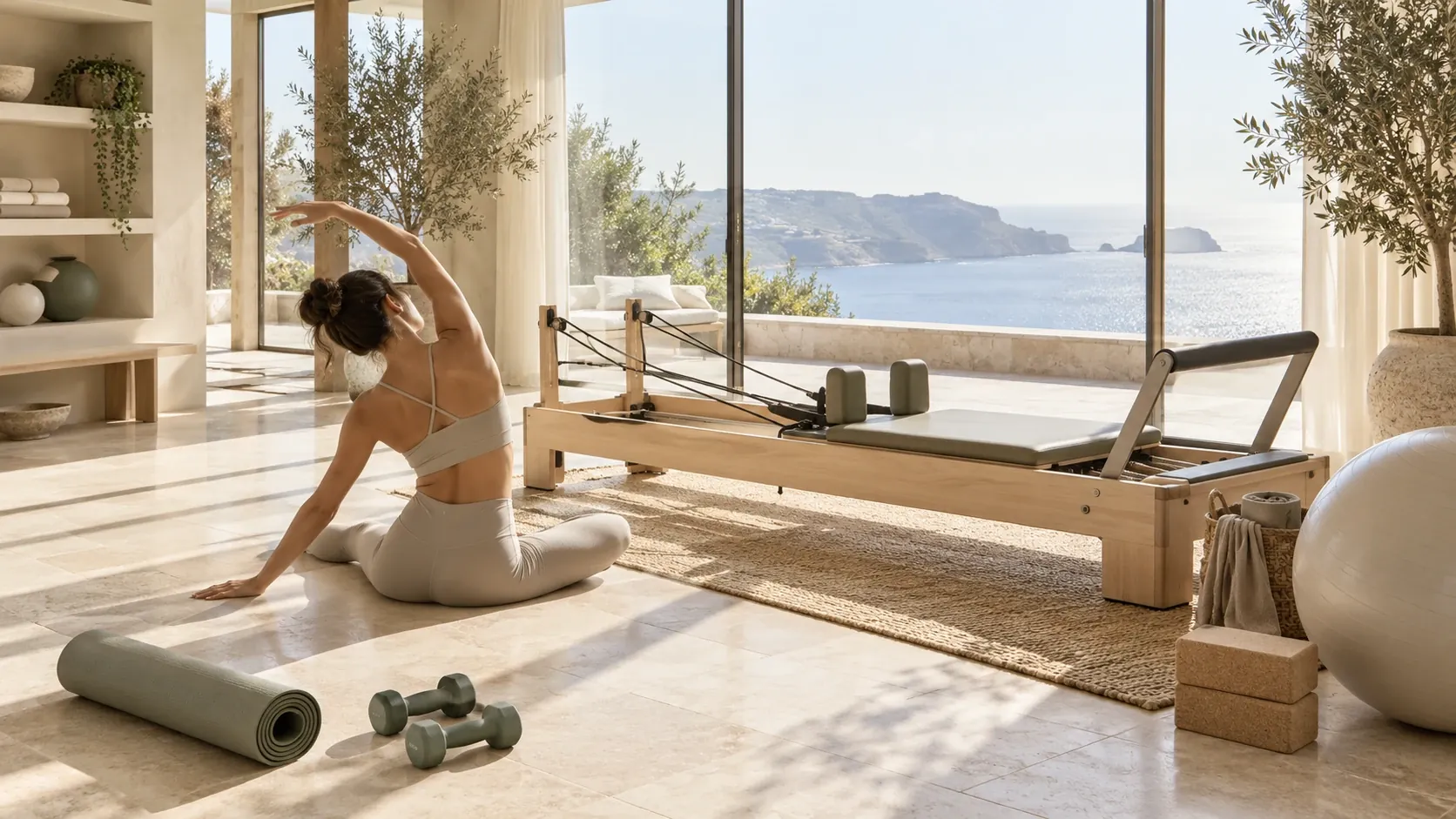
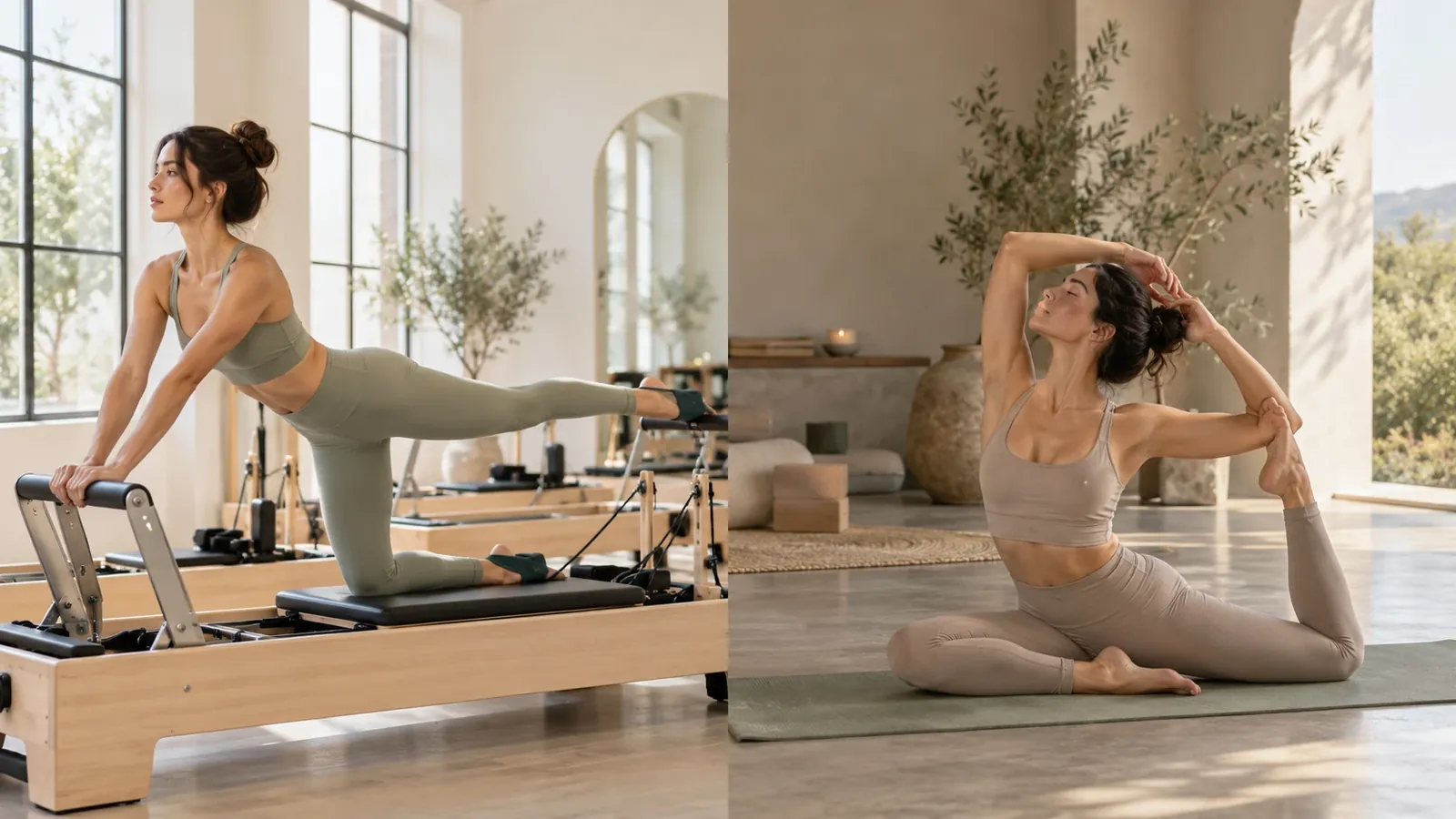
Pilates and yoga both use controlled movement, but they are not interchangeable classes. Pilates commonly emphasises repeated movement patterns, muscular control, and progressive exercises, while yoga classes typically combine postures with breath-focused practice and may include meditation.
The Pilates vs yoga comparison is most useful when it focuses on individual goals rather than declaring an overall winner. Class styles, teacher qualifications, equipment, accessibility, and price can vary considerably within both practices.
Key Takeaways
- Pilates commonly trains controlled movement, strength, and trunk stability through mat or apparatus-based exercises. Yoga styles vary but often combine physical postures, breathing, and sometimes meditation.
- Neither activity guarantees a particular body shape, pain outcome, or weight change. Programme design, effort, consistency, and individual circumstances influence results.
- The Health & Fitness Association reported that yoga remained the most practised tracked activity among US fitness facility members in 2025, with 17.7 million participants; Pilates participation grew 28.1% between 2021 and 2025.
- A 2026 meta-analysis of 35 randomised trials involving 2,132 participants found evidence that both Pilates and yoga can improve certain outcomes for nonspecific low-back pain, although study methods and results varied.
- Yoga Alliance estimated 38.4 million people practised yoga in the United States in 2022. This population estimate must not be directly compared with fitness facility participant counts from a different survey.
- Mat-based classes can require limited personal equipment, while reformer Pilates involves specialised apparatus and often smaller-capacity classes. Exact prices depend on the studio and location.
Pilates vs Yoga: Quick Comparison
Both disciplines contain numerous class formats, so the following table describes common patterns rather than rigid definitions. Some advanced yoga styles are physically demanding, and some Pilates sessions are gentle or rehabilitation-oriented.
| Factor | Pilates | Yoga |
|---|---|---|
| General emphasis | Movement control, muscular coordination, strength and stability | Postures, breath practices and sometimes meditation |
| Common formats | Mat Pilates, reformer, Cadillac and other apparatus | Hatha, Vinyasa, Iyengar, restorative and other styles |
| Equipment | Mat, props, or dedicated machines | Mat and optional blocks, straps or bolsters |
| Class pacing | Repetitions and coached movement sequences | Ranges from slow holds to dynamic transitions |
| Breathing | Used to coordinate exertion and movement | Can be an explicit practice as well as movement cue |
| Strength training | Resistance may come from body weight, springs or apparatus | Body-weight loading varies by style |
| Flexibility | Frequently incorporated within controlled movements | Often a prominent goal, but varies by class |
| Mindfulness | Attention to movement and breathing | Mindfulness and meditation may be central to some styles |
| Beginner access | Mat fundamentals or introductory apparatus classes | Beginner Hatha or gentle classes and modifications |
| Cost drivers | Instructor time, room size, specialised equipment | Instructor time, room size, venue, style and location |
1. Historical Foundations and Main Purpose
Pilates and yoga developed through different histories, and modern studios sometimes blend techniques from both. Their current fitness applications should still be distinguished from their broader traditions.
Pilates as a System of Controlled Exercise
Joseph Pilates developed a structured exercise approach during the twentieth century, often referred to as Contrology. Modern classes commonly emphasise coordinated breathing, alignment, and controlled movement through a sequence of exercises.
Pilates is offered as mat-based instruction and as apparatus-based work using springs and resistance. Its exact programming can range from general fitness to supervised therapeutic exercise, depending on the teacher and setting.
Yoga as a Broader Practice
Yoga has historical roots that extend beyond modern group fitness, and its many traditions cannot be reduced to stretching. Contemporary classes may include physical postures, breathing practices, attention training, or meditation in different combinations.
This variation makes class descriptions important. A vigorous Vinyasa session and a restorative yoga session may place very different physical demands on the same participant.
2. Muscle Strength and Resistance
Both Pilates and yoga can challenge muscles, but resistance is delivered differently. Neither should automatically be described as equivalent to a fully progressive gym programme, as the comparison of Pilates vs strength training shows.
Where Pilates Often Places the Emphasis
Pilates exercises commonly focus on controlled movement through the trunk, hips, shoulders, and limbs. Reformer and other apparatus-based programmes can vary spring resistance, body position, and exercise complexity to change the challenge.
Strength outcomes depend on exercise selection and progression. A gentle introductory class may not provide the same resistance stimulus as an advanced apparatus session.
Where Yoga Can Challenge Strength
Yoga styles involving repeated transitions and held postures can develop muscular endurance and body control. Planks, standing postures, and balances can be physically demanding when adapted to the participant's level.
However, some yoga formats emphasise relaxation or supported movement over high muscular loading. Asking about class style is more useful than assuming all yoga sessions train strength equally.
3. Flexibility and Mobility
Flexibility is often mentioned in marketing for both activities, but it is not guaranteed by attendance alone. Range of motion can change through consistent, appropriately scaled practice, while overstretching can cause problems.
Mobility in Pilates Sessions
Pilates often combines movement through a controlled range with muscular engagement. Teachers may adjust an exercise to develop coordination rather than simply encourage the largest possible stretch.
This approach can be suitable for people seeking better movement control, but specific benefits depend on instruction and the exercises selected. Claims of permanent posture correction should be treated cautiously.
Flexibility in Yoga Classes
Yoga programmes may include sustained postures, repeated transitions, and breathing techniques. Styles differ substantially in how long positions are held and how much mobility is required.
Beginners should not assume they need to be flexible before starting. A qualified instructor can offer modifications, though some poses may still be inappropriate for particular injuries or medical conditions.
4. Breathing, Attention and Relaxation
Breathing is present in both disciplines, but the role it plays can differ. A Pilates teacher may cue breathing to coordinate a movement, while yoga instruction may include breathing exercises as a distinct practice.
Breathing During Pilates
Pilates classes often use a consistent breathing pattern to support control and movement timing. This can make complex exercises feel more organised and improve attention to technique.
Breathing cues differ by school and instructor. They should not be presented as a proven treatment for respiratory disease without research specific to that claim.
Breathwork and Meditation in Yoga
Some yoga programmes explicitly include pranayama, relaxation or meditation. The National Center for Complementary and Integrative Health notes that yoga may support stress management and aspects of mental wellbeing, although effects vary across the literature.
Not every modern yoga class includes meditation. Students seeking a calmer experience, whether in a weekly class or on one of the wellness retreats for women built around yoga, should check whether that feature is part of the session rather than assuming it will be offered.
5. Evidence for Low-Back Pain
Back-pain claims require particular care because people with different diagnoses may respond differently to exercise. Pilates and yoga have both been studied, but the strongest conclusion is not that either is a universal treatment.
What the 2026 Research Found
A 2026 systematic review and meta-analysis included 35 randomised controlled trials and 2,132 participants with low-back pain. It reported improvements in several pain and function measures for Pilates and yoga compared with selected control conditions, although estimates varied and the included studies were heterogeneous.
A network meta-analysis of 32 trials, published in 2026, found especially favourable short-term results for Pilates compared with usual care, while yoga did not differ significantly from control at follow-up. These are findings within specific study designs, not proof that Pilates is superior for every individual or every form of back pain.
Why Guidelines Still Require Individual Assessment
The US National Center for Complementary and Integrative Health describes the evidence for yoga and low-back pain as showing a slight benefit, and notes it is unclear whether yoga differs from other exercise. Cochrane's evidence summaries likewise distinguish certainty levels and follow-up periods.
People with persistent pain, neurologic symptoms, recent injury, or complex medical histories should seek appropriate assessment. An instructor-led class should not substitute for diagnosis or individual clinical care.
6. Balance, Coordination and Body Awareness
Both types of practice can involve balance challenges and attention to positioning. The right difficulty depends on class design, support options, and the participant's baseline capacity.
Pilates and Controlled Movement
Pilates exercises often require coordination between the trunk and limbs during repeated sequences. Apparatus can provide assistance or resistance, giving instructors different ways to scale an exercise.
This flexibility is useful, but specialised equipment is not inherently safer. Instruction quality, suitable progression, and the user's needs remain central.
Yoga and Balance Practice
Yoga may include supported standing postures, single-leg positions, and transitions requiring stability. NCCIH reports evidence that some yoga programmes can benefit balance, particularly in certain older-adult study populations.
Not every yoga style is appropriate for every participant. Teachers should offer support and alternatives when a posture introduces unnecessary fall or joint risk.
7. Mat Pilates, Reformer Pilates and Yoga Equipment
One of the most visible differences in commercial studios is the equipment used. Mat-based Pilates and yoga can be delivered with relatively modest props, while reformer classes require dedicated machines.
Mat-Based Training
A yoga mat, blocks, straps or small exercise props may be sufficient for many beginner sessions. This creates opportunities for studio, community, and home-based participation in both disciplines.
Equipment quality and accessibility still affect comfort. A supportive mat or suitable modifications may be more useful than purchasing several accessories before trying a class.
Reformer Pilates and Apparatus
Reformer Pilates uses a carriage, springs, straps and other components to modify resistance and movement. Other Pilates apparatus includes the Cadillac and chair, depending on the training environment.
Machines add maintenance, floor-space, and instructor-training costs for studios. That can affect class capacity and pricing, but an individual studio's price should be checked rather than generalised to the entire industry.
8. Beginner Friendliness and Learning Curve
Either practice can be suitable for beginners when taught in an appropriate class. The biggest risk is selecting an advanced session based on a broad label rather than the actual movements and expectations.
Choosing a First Pilates Class
A mat fundamentals session or introductory reformer class can teach common movements at a slower pace. New participants should disclose relevant limitations and ask whether the instructor can offer modifications.
Reformer classes may feel unfamiliar even to active people because the machine changes leverage and coordination. Prior gym experience does not guarantee correct apparatus technique.
Choosing a First Yoga Class
Gentle or beginner Hatha classes can be accessible starting points, while vigorous or heated formats may add physical demands. NCCIH advises beginners to avoid pushing into extreme positions and to seek qualified instruction.
People with balance concerns, pregnancy, or certain other conditions may need specific modifications. The class description and instructor discussion should guide the decision.
9. Participation and Market Data
Demand for both formats has commercial significance, especially for studios planning classes and equipment investments. Survey methods matter because a national estimate of yoga practitioners is not the same as an activity count among fitness facility members.
US Yoga Participation Statistics
Yoga Alliance's Yoga in the World study estimated 38.4 million US yoga practitioners in 2022, an increase of 4.6% from 2016. It also reported more than $21 billion in US spending on yoga-related activities and products in 2022.
These are survey estimates with particular definitions and reference periods. They should not be described as 2026 participation numbers or used to calculate studio revenue without additional evidence.
HFA's More Recent Fitness Facility Findings
The Health & Fitness Association's 2026 report, covering 2025, describes yoga as the most widely practised tracked activity among fitness facility members, with 17.7 million participants. It reports Pilates participation growth of 28.1% between 2021 and 2025 within its tracking series.
HFA also reported a record 81 million US fitness facility members in 2025, with membership penetration of 26.1%. That is contextual facility-market information, not a count of Pilates or yoga customers across every setting.
10. Class Prices and Value for Money
Neither yoga nor Pilates has a universal US class price. Costs change with city, studio positioning, instructor time, group size, equipment, package length, and cancellation policy.
Why Reformer Pilates Often Uses Premium Pricing
A reformer studio must purchase and maintain specialised equipment and allocate floor space to machines. Group size may also be limited by the number of reformers available, which can influence the economics of each session.
This provides a business explanation for pricing differences, but not proof that reformer classes are always more expensive in every city. Actual rates should be compared using current studio listings.
How to Compare Membership and Drop-In Costs
A class package may reduce the cost per session but create expiry or cancellation restrictions. Drop-in bookings offer flexibility, while recurring memberships can work better for consistent attendance. A Pilates class cost calculator shows which option costs less at your own attendance level.
Before paying, compare intro offers, normal class rates, booked-session limits, waitlists, and missed-class policies. An attractive advertised rate may apply only to a first visit or a minimum commitment.
Which Is Better for Different Goals?
The practical decision depends on the intended outcome and which sessions a person can consistently attend. These are suitability considerations rather than guarantees of medical or aesthetic results.
- Movement control and apparatus-based progression: Explore a suitably coached Pilates class.
- Posture practice with breathwork or meditation: Consider a yoga style that explicitly includes those elements.
- Low-equipment home practice: Mat Pilates or beginner yoga may both be feasible with limited equipment.
- Specific pain or rehabilitation concerns: Seek clinical guidance before selecting either programme as treatment.
- Varied training: Some people combine both practices with aerobic exercise and resistance training rather than choosing one exclusively.
FAQs
Is Pilates Better Than Yoga for Strength?
Pilates often places more explicit emphasis on repeated resistance and movement control, especially with apparatus, but some yoga styles are physically demanding. Strength gains depend on exercise selection, load, progression and frequency. Neither activity automatically replaces progressive resistance training for someone whose main goal is maximal strength.
Is Yoga Better Than Pilates for Flexibility?
Some yoga classes feature longer holds or more dedicated stretching, while Pilates often trains mobility within controlled movement. Results depend on the instructor, the chosen style and the participant's starting point. It is more useful to compare specific classes than to claim one discipline always improves flexibility faster.
Is Pilates or Yoga Better for Lower Back Pain?
Both have been studied for nonspecific lower back pain, and some reviews report improvements in pain or function. Effects vary between studies, and neither practice is appropriate for every diagnosis. Persistent or worsening symptoms need professional assessment rather than relying on a general group class as medical treatment.
Is Reformer Pilates Harder Than Yoga?
The comparison depends on the session. Introductory reformer exercises can be carefully supported, while advanced yoga sequences may demand substantial strength, balance and mobility. Equipment familiarity also changes perceived difficulty, so a beginner should choose an explicitly suitable class and ask about modifications.
Is Pilates More Expensive Than Yoga?
Reformer sessions can cost more because studios invest in machines, floor space and specialised instructor training. However, actual prices vary by location, format and membership arrangement. Compare published local rates and package conditions instead of assuming that any Pilates class is more expensive than every yoga class.
Can Beginners Do Pilates and Yoga in the Same Week?
Many healthy beginners can try both when intensity and recovery are appropriate. Start with suitable classes, follow instruction and allow time to adapt to unfamiliar movements. People with injuries or medical conditions should ask an appropriate clinician about restrictions and discuss modifications with their instructors.
The Best Choice Is the Class You'll Use Well
Pilates and yoga have different traditions and often different exercise emphases, but their real-world formats overlap. Both can contribute to an active routine when classes are appropriate, well taught and attended consistently.
The strongest comparison looks at goals, actual class content, equipment, instructor experience and cost. Research supports selected benefits for both practices, but does not justify declaring one universally superior.
Sources and Research Notes
- Health & Fitness Association, 2026 US Health & Fitness Consumer Report: Headline Trends, April 2026. US facility membership statistics.
- Health & Fitness Business, Research: HFA Survey, May 2026. Yoga participation among fitness facility members and Pilates growth in 2021–2025.
- Yoga Alliance, Yoga in the World: United States. Survey data for 2022 yoga participation.
- Yoga Alliance, Yoga in the World Executive Summary. 2022 US expenditure context.
- NCCIH, Yoga: Effectiveness and Safety. Clinical research, precautions, and practice context.
- 2026 systematic review and meta-analysis of exercise for low-back pain. Thirty-five randomised trials, 2,132 participants.
- 2025 network meta-analysis of mind-body exercise and low-back pain. Thirty-two randomised trials, 2,480 participants; interpret comparative findings cautiously.
- Cochrane overview of nonpharmacological low-back-pain approaches. Evidence certainty and limitations.
Editorial methodology: Participation figures are attributed to their original surveys and are not combined across populations. Training descriptions refer to typical class approaches, not universal rules. No hands-on classes or independent instructor evaluations were performed. No universal pricing claim has been made without location-specific evidence.