

Mental wellness apps don't all do the same job. Headspace and Calm are built around meditation and sleep audio. How We Feel helps you name emotions. Daylio and stoic. lean toward journaling, and Finch turns self-care into looking after a virtual pet. Bearable goes further, letting you compare mood with sleep, stress, medication and daily habits.
That range makes star ratings a poor way to choose. Better questions are simpler. Do you want guided content or self-tracking? How much works without paying? What data does the app keep? And is it a general wellness tool, or closer to structured mental health support?
We compared nine current apps using official product pages, US App Store listings, published pricing, privacy information and independent research. We didn't test them hands-on. Being on this list doesn't mean an app suits every mental health concern. If meditation is your main interest, our free meditation apps comparison goes deeper on that category.
The Short Version: Which App Fits Which Job?
Each app below has a clear strongest use. The table shows that use, what's free and the main trade-off.
| App | Strongest use | Free access | Paid plan | Main limitation |
|---|---|---|---|---|
| Healthy Minds Program | Science-led meditation and well-being skills | Yes | Donation-supported | Less suited to mood journaling |
| Headspace | Broad meditation and sleep library with optional care services | Limited | $12.99/mo or $69.99/yr | Therapy and coaching are priced separately |
| Calm | Sleep stories, relaxation audio and meditation | Limited free library | App Store options from $14.99/mo or $69.99/yr | Weak for mood or symptom tracking |
| Finch | Motivation for small daily self-care tasks | Yes | Finch Plus, price varies by offer | Gamified style won't suit everyone |
| How We Feel | Naming emotions and spotting patterns | Yes | Free | iPhone only and narrow in scope |
| Daylio | Quick mood and habit tracking | Yes | Premium from $4.99/mo | A tracker, not guided care |
| MindDoc | Structured mood monitoring and CBT-based lessons | Yes | MindDoc Plus, several plans | More clinical in tone |
| Bearable | Linking mood with symptoms, sleep and habits | Yes | $6.99/mo or $34.99/yr | Can feel data-heavy |
| stoic. | Private journaling and reflection | Yes | Premium, price varies | Best if you already like writing |
Prices were checked against official sources and US App Store listings in early November 2026. They can change by region and offer.
How We Compared the Apps
Six questions guided the comparison. They stop us treating very different products as if they were the same thing.
- What is the app built to do? A meditation library, a journal and a symptom tracker are different tools.
- What can you use for free? We separated permanent free access from short trials.
- What does paying add? Where there's no single public price, we say so.
- How does it handle your data? We used official privacy policies and App Store privacy labels.
- Does it make clinical claims? Therapy, coaching and self-help aren't interchangeable.
- Who will actually stick with it? The best app is the one that fits a habit you'll keep.
What Research Says About Mental Health Apps
The evidence is real but mixed, so no app should be treated as equally effective for everyone.
A 2025 meta-analysis in The Lancet Digital Health pooled 72 randomized controlled trials with 21,702 participants. Standalone apps showed benefits for depression, anxiety and sleep problems compared with inactive controls. The authors also found wide variation between studies and concerns about study quality.
A 2026 review in the Journal of Affective Disorders covered 35 studies. App users showed improvements in depression, anxiety, stress and well-being. Again, results varied a lot from study to study.
So this comparison looks at design and verified features. It doesn't claim an app "treats" anxiety or depression just because its store page mentions them.
1. Healthy Minds Program: Structured Skills Without a Subscription
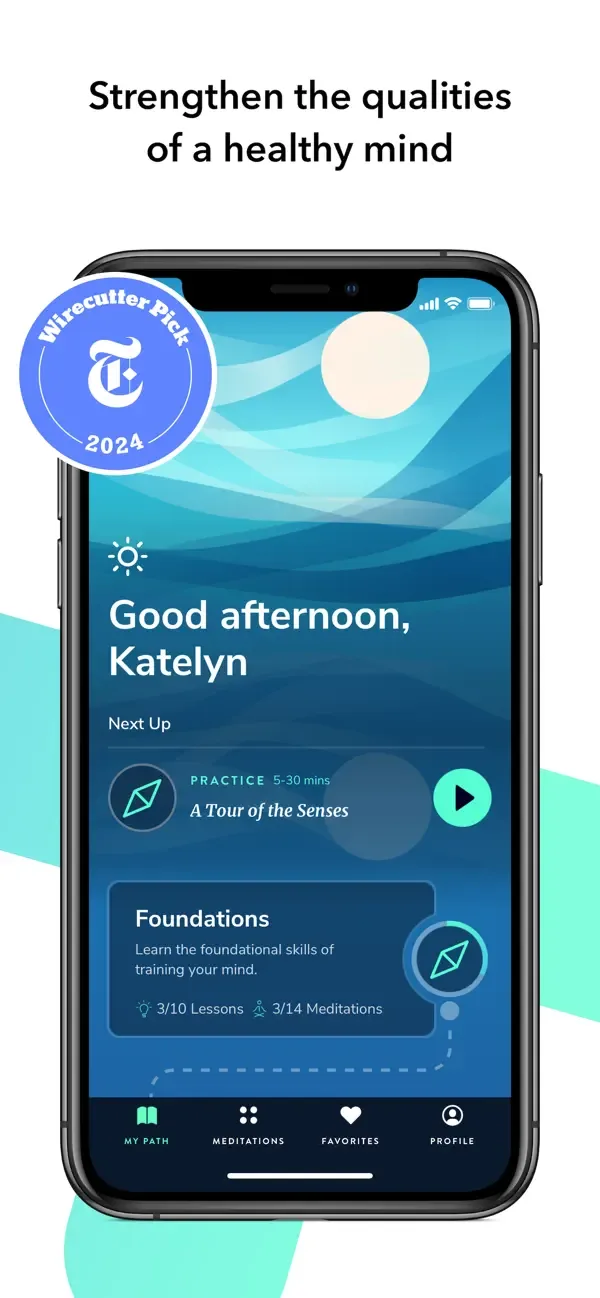
Healthy Minds Program is the clearest pick here for a structured meditation course you don't pay for. Donations keep it running. It grew out of research at the Center for Healthy Minds at the University of Wisconsin-Madison. The nonprofit behind it is now called Humin, formerly Healthy Minds Innovations.
The course is built around four skills: Awareness, Connection, Insight and Purpose. Sessions mix guided practice with short podcast-style lessons. Some practices are active, so you don't always have to sit still.
Where It Stands Out
Nothing sits behind a paywall in the core program. That's different from apps whose free library mainly exists to sell an upgrade.
The App Store listing mentions research done with the app. Read those figures as the organization's own findings, not a promise of results. The fair takeaway is a clear curriculum with research behind it.
Best fit: A free, structured meditation and well-being program for people who don't need detailed mood journaling.
Cost: Free, supported by donations.
2. Headspace: Meditation, Sleep and Optional Human Support
Headspace is now much more than a meditation timer. The app includes over 500 guided meditations, sleep content, breathing exercises, movement and progress tracking. It also has Ebb, an AI companion. Coaching and therapy are available too, but they're separate services with their own pricing and eligibility rules.
The US App Store lists the subscription at $12.99 a month or $69.99 a year.
Where It Stands Out
Headspace suits people who'd rather use one app for meditation, sleep and relaxation. Having coaching and therapy from the same company is unusual among consumer apps.
Keep one distinction in mind. A meditation subscription isn't therapy. Privacy rules for clinical care can also differ from those for everyday app use.
Best fit: A large meditation and sleep library, with care options available if you need them later.
3. Calm: Sleep Stories and Relaxation Audio

Calm has one of the best-known sleep and relaxation libraries around. You'll find guided meditation, breathing exercises, music, soundscapes, Sleep Stories and mindfulness programs. Winding down and sleeping sit at the center of it.
A free account unlocks a small set of content. Calm says prices vary by region and platform. In the US App Store, Premium options currently include $14.99 a month and $69.99 a year, with other offers shown at different times.
Where It Stands Out
If your goal is a calmer bedtime routine, Calm fits that job better than a mood tracker. Sleep content is the main event here, not an add-on.
It's a weaker choice for tracking emotional triggers or keeping a detailed written journal.
Best fit: Sleep stories, calming audio and simple relaxation routines.
4. Finch: Self-Care That Feels Less Like a Task List

Finch takes a playful route. You look after a small virtual bird, and it grows as you complete self-care activities. Those include goals, quick check-ins, short reflections, breathing exercises and mood tracking.
The core app is free. Finch Plus adds more options and content. Trial offers change depending on how you sign up, so check the price in the app rather than trusting an old figure.
Where It Stands Out
Finch is about follow-through more than analysis. If you keep downloading habit trackers and abandoning them, the reward loop might help you stick around.
The same design can put others off. If you like a quiet, minimal interface, the cute style may grate. Gamification is a preference, not an advantage.
Best fit: Small daily self-care goals and gentle motivation.
5. How We Feel: Learning to Name Emotions

How We Feel is deliberately narrow, and that's part of its appeal. You pick an emotion, log a check-in and watch for patterns over time. The project was created with the Yale Center for Emotional Intelligence and runs as a nonprofit.
The app also suggests short strategies, such as changing a thought, moving, practicing mindfulness or reaching out to someone. Apple Health integration can link check-ins with sleep and exercise trends.
Where It Stands Out
Its privacy approach is easy to explain. The developer says your data stays on your device unless you choose to share an anonymized version for research.
It's also free. The trade-off is scope. This isn't a meditation catalog, a therapy service or a symptom tracker.
Best fit: Building emotional awareness with quick check-ins instead of long journal entries.
Cost: Free.
6. Daylio: Mood Tracking With Very Little Typing

Daylio keeps things simple. You pick a mood, tap the activities that shaped your day and add a note if you want. Over time, the app turns those entries into charts and calendars that show patterns.
The free version covers the core tracking. Premium adds customization and deeper stats. The App Store shows several prices, including $4.99 a month, with annual and promotional offers that vary.
Where It Stands Out
Daylio works well if you want data without committing to long journal entries. Its support pages say entries are stored on your phone, with optional backup to your own Google Drive or iCloud.
That doesn't mean no data at all leaves the app, so read the full privacy policy. Still, it's a different model from a cloud-first diary.
Best fit: Fast mood and habit tracking with optional notes.
7. MindDoc: Structured Mood Monitoring and Self-Help Lessons

MindDoc sits closer to structured mental health self-management than a general mindfulness app. It combines mood check-ins, journaling, feedback and courses based on cognitive behavioral therapy (CBT). The company says clinical psychologists and researchers developed it.
There's a free version and an optional MindDoc Plus subscription. The App Store lists several Plus plans, so check the current options there.
Where It Stands Out
MindDoc may suit someone who wants a steady record of emotional patterns and lessons to revisit. You can also create an assessment to share with a healthcare provider.
Read its intended-use information carefully. The US listing describes its European medical-device status. Even so, it doesn't replace a clinician, and an app-generated assessment isn't a diagnosis.
Best fit: Structured mood monitoring with CBT-informed lessons.
Privacy note: MindDoc says it's ISO 27001 certified, GDPR compliant and uses encrypted storage.
8. Bearable: Mood Data Alongside the Rest of Your Health
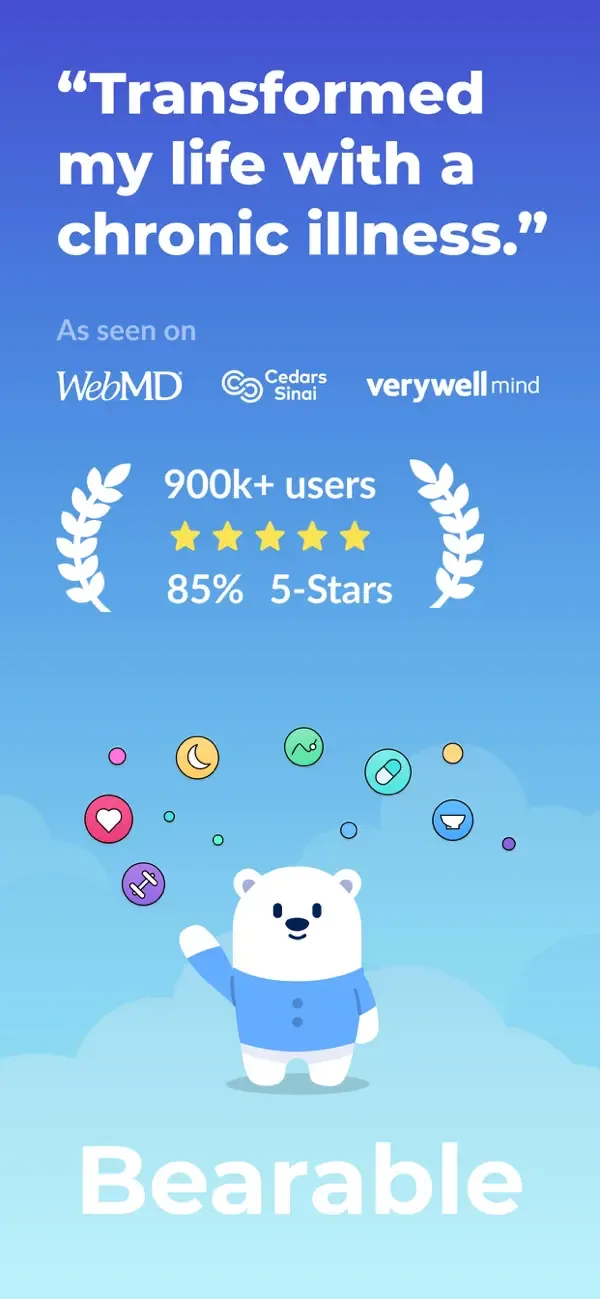
Bearable is broader than a mood tracker. You can log symptoms, mood, energy, sleep, stress, medication, treatments and lifestyle factors. Then the app looks for links between them. That's useful when mental well-being is one part of a bigger picture.
Most tracking is free. Bearable lists Premium at $6.99 a month or $34.99 a year, which adds longer comparison periods plus extra goals and reports.
Where It Stands Out
A simple mood app can tell you a week felt hard. Bearable helps you compare that week with sleep, activity, medication, weather and anything else you log.
Remember that correlation isn't causation. Two things moving together is a reason to watch more closely, not proof that one caused the other.
Best fit: People managing several symptoms who want mood in the same record.
Privacy note: Bearable says it doesn't sell user data.
9. stoic.: Private Reflection and Guided Journaling

stoic. combines morning planning, evening reflection, mood tracking, habit review and journaling prompts. It also has breathing, meditation, therapy-note templates and a distraction blocker. Journaling is still the heart of it.
There's a free tier, and Premium adds more features and backup. The developer doesn't publish one fixed US price, so check the App Store for the current offer.
Where It Stands Out
The developer says journals are stored on your devices, with backup available through Premium. That appeals to people who want their writing to feel like a private notebook.
It's a poor fit if you want a structured program or a big audio library. Its value depends on whether you'll actually write.
Best fit: Guided journaling, daily reflection and mood check-ins.
Which Mental Wellness App Should You Choose?
Start with the habit you want the app to make easier. Then compare the apps that match it.
| If you mainly want to... | Start with... |
|---|---|
| Meditate without a subscription | Healthy Minds Program |
| Combine meditation, sleep and optional care | Headspace |
| Build a bedtime and relaxation routine | Calm |
| Stay motivated with small self-care tasks | Finch |
| Name and understand emotions | How We Feel |
| Track mood with minimal typing | Daylio |
| Follow structured mood monitoring and lessons | MindDoc |
| Compare mood with symptoms and habits | Bearable |
| Keep a guided private journal | stoic. |
You don't need the app with the most features. A narrow tool that fits an existing habit is easier to keep using than an all-in-one platform that asks for more attention than it gives back. If screen time itself is part of the problem, our digital wellbeing apps comparison covers app blockers and focus tools.
What to Check Before Sharing Sensitive Information
Privacy policies are hard to compare, because companies define health, account and analytics data differently. Start with these four questions:
- Where are entries stored? On-device and cloud storage carry different risks and conveniences.
- Can you delete or export your data? Look for a clear process, not a vague promise.
- Is data used for ads or shared with service providers? Read the current policy itself.
- Does the app provide clinical care? Consumer wellness data and covered healthcare data can follow different rules.
Apple's privacy labels are a useful first screen. Remember that developers write them, so they aren't an independent audit.
FAQs
What Is the Best Free Mental Wellness App?
Healthy Minds Program and How We Feel are the clearest free options here, because their core experiences aren't limited trials. Finch, Daylio, MindDoc, Bearable and stoic. also have usable free tiers, though paid upgrades unlock more features.
What Is the Difference Between a Mental Wellness App and Therapy?
A wellness app offers tools such as meditation, journaling, mood tracking and self-care exercises. Therapy is care from a qualified professional within a clinical relationship. Headspace offers both, but using its app on its own isn't the same as receiving therapy.
Are Mental Wellness Apps Private?
It varies a lot between apps. How We Feel says check-ins stay on your device unless you opt into anonymized research sharing. Daylio stores journals locally with optional private cloud backup. Others use cloud accounts and collect more data, so check each policy for the features you use.
Which App Is Best for Mood Tracking?
Daylio suits quick mood and activity logging with almost no typing. How We Feel focuses on naming emotions, while Bearable adds symptoms, treatments and lifestyle factors. MindDoc offers the most structured monitoring of the group.
Can a Mental Wellness App Diagnose Anxiety or Depression?
No. Consumer wellness apps shouldn't be treated as diagnostic tools, even when they include questionnaires or symptom assessments. Seek qualified care if symptoms are persistent, severe or affecting your safety or daily life.
Is Headspace or Calm Better?
It depends on what you want. Headspace offers a broader setup that includes meditation, sleep, an AI companion and separately priced coaching or therapy. Calm puts more weight on sleep stories, relaxation audio and its meditation library.
Sources
Research
- Kulke JK et al., Efficacy of Standalone Smartphone Apps for Mental Health: An Updated Systematic Review and Meta-Analysis, Lancet Digital Health 2025.
- Pasch L et al., App-tivating Progress: Smartphone Apps for Mental Health Relief, Journal of Affective Disorders 2026.
Official Product and Pricing Sources
- Healthy Minds Program on the App Store
- Headspace on the App Store
- Headspace privacy policy
- Calm on the App Store
- Calm pricing update
- About Finch
- Finch on the App Store
- How We Feel on the App Store
- Daylio on the App Store
- MindDoc
- MindDoc on the App Store
- Bearable pricing and principles
- Bearable on the App Store
- stoic.
- stoic. on the App Store
Features, prices and privacy policies change. This comparison is based on documented features and does not claim hands-on testing.