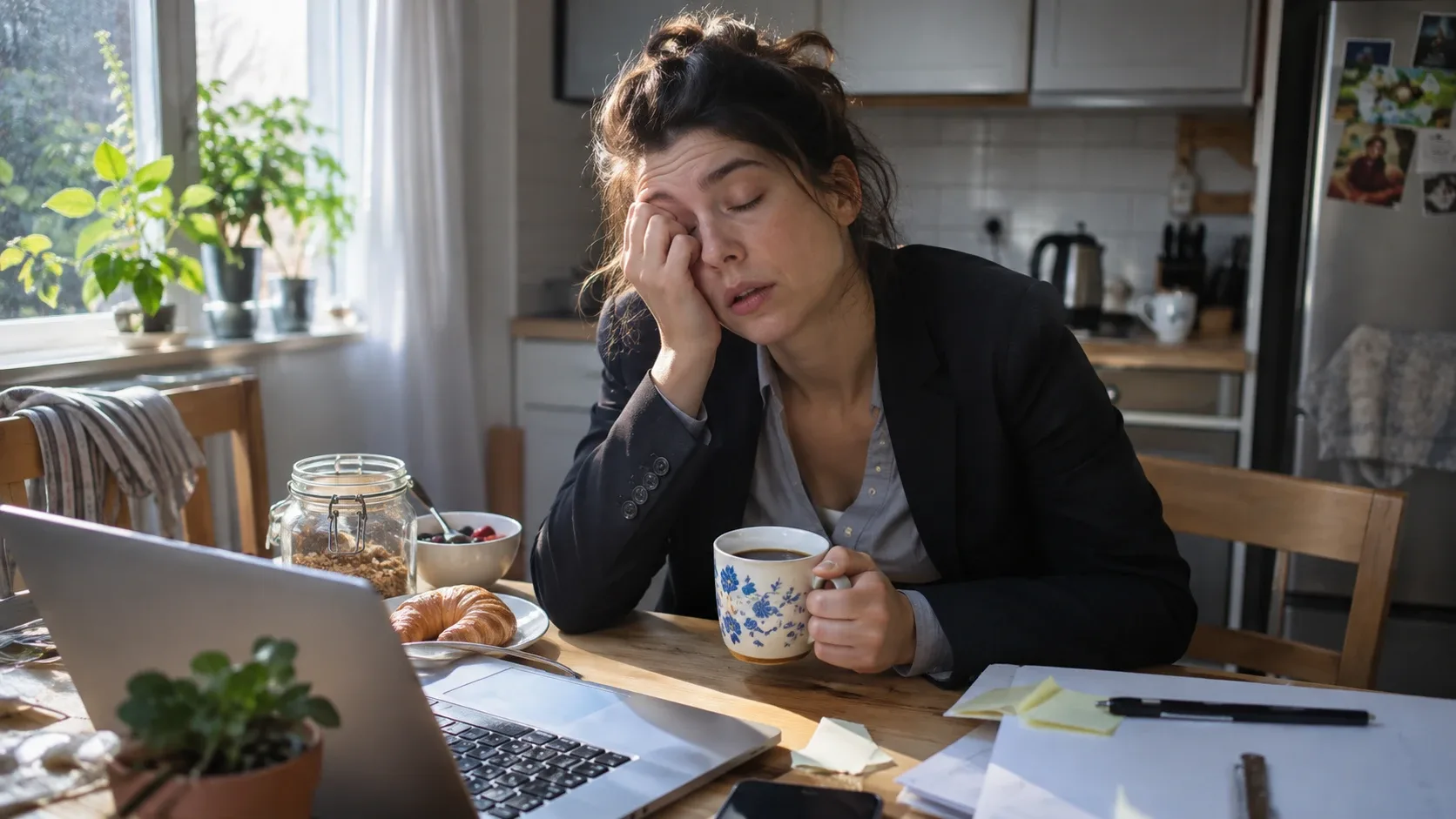

How stressed are Americans? It depends on the question. A score on a 10-point scale, the share of people worried about artificial intelligence and the rate of diagnosed anxiety disorders are three different things. Yet stress statistics roundups often list them side by side as if they measured the same thing.
The American Psychological Association's Stress in America 2025 survey is a good example. Run with The Harris Poll among 3,199 US adults, it found that average self-reported stress was about 5 out of 10. Large shares named specific worries, such as misinformation and AI. Those are self-reported feelings, not diagnoses.
Here's what the latest figures show and how to read them.
US Stress Statistics at a Glance
| Stress in America 2025 finding | Figure |
|---|---|
| Average self-reported stress, 0 to 10 scale | About 5 |
| Say misinformation is a source of stress | 69% |
| Say the rise of AI is a source of stress | 57% |
| Adults 18 to 34 citing AI as a source of stress | 65%, up from 52% the year before |
| Adults surveyed | 3,199 |
APA noted that overall stress stayed fairly steady compared with earlier years, while some specific worries rose.
Stress Doesn't Have One Rate
If 69% of people name misinformation as a stressor, that doesn't mean 69% have a stress-related illness. People can pick several sources of stress, so the answers can't be added up into one total.
There's also no single definition of "high stress." Surveys use different questions, scales and time frames. Before comparing years or organizations, check that the questions match.
Young Adults and AI Worries
In the 2025 survey, 65% of adults aged 18 to 34 said AI was a source of stress, up from 52% a year earlier. That's a 13 percentage point jump. It doesn't prove AI itself caused the change, and it doesn't mean everyone who worries about AI uses it.
Why "Average Stress" Can Hide a Lot
Two groups can share an average stress score of 5 and feel very different. In one, most people might be moderately stressed. In the other, some might be very calm and others very stressed. Without the full spread and the sample details, an average doesn't describe a typical person.
The same goes for questions about specific worries. How many people name a stressor and how intense their stress feels are different measures, even when they appear on the same chart.
Work Stress vs Life Stress
Workplace surveys tend to ask about burnout, workload and job security. National surveys ask about news events, family, money and health. Burnout has its own definition tied to chronic workplace stress, so it isn't the same as all stress. Our workplace wellness statistics cover how many workers can use employer wellness programs.
Are Stress Surveys Reliable?
Well-run surveys describe what people report at a given time. They're still sensitive to wording, memory, sampling and timing. A big news event during the survey can change what people name as stressors without reflecting a lasting shift. That's why it's worth citing the survey year and the exact question.
What Helps With Stress?
A survey like this identifies worries. It doesn't test which solutions work. Claims that an app, employer program or product reduces stress need their own evidence. Popularity isn't proof.
If you want to try a tool, our free meditation apps comparison covers no-cost options, and our mental wellness apps guide covers journaling, mood tracking and therapy-linked apps. Teens face their own pressures, which our screen time statistics explore. If stress is affecting your sleep, health or daily life for weeks, talk to a healthcare professional.
FAQs
What Is the Average Stress Level in America?
APA's Stress in America 2025 survey found average self-reported stress was about 5 on a 10-point scale. That reflects one survey's method, not a medical measurement or a score that fits every American.
What Percentage of Americans Are Stressed About AI?
In APA's 2025 survey, 57% of adults said the rise of AI was a source of stress. Among adults aged 18 to 34, it was 65%, up from 52% the year before. That measures worry about AI, not diagnosed anxiety.
Is Stress Rising Every Year?
Not necessarily. APA said overall stress stayed fairly steady while some specific worries, such as misinformation and AI, rose. Trends depend on what's measured, when the survey ran and whether the questions stayed the same.
Is Workplace Burnout the Same as Stress?
No. Burnout is tied specifically to chronic workplace stress, while stress can come from any part of life. Mixing their statistics hides differences in who was surveyed, how terms were defined and what might help.
Sources
- American Psychological Association, Stress in America 2025. Conducted by The Harris Poll among 3,199 US adults.
- World Health Organization, Stress: Questions and Answers.
- NIMH, I'm So Stressed Out! Fact Sheet.
This article gives general information, not medical advice. If you're in crisis, call or text 988 in the US.