
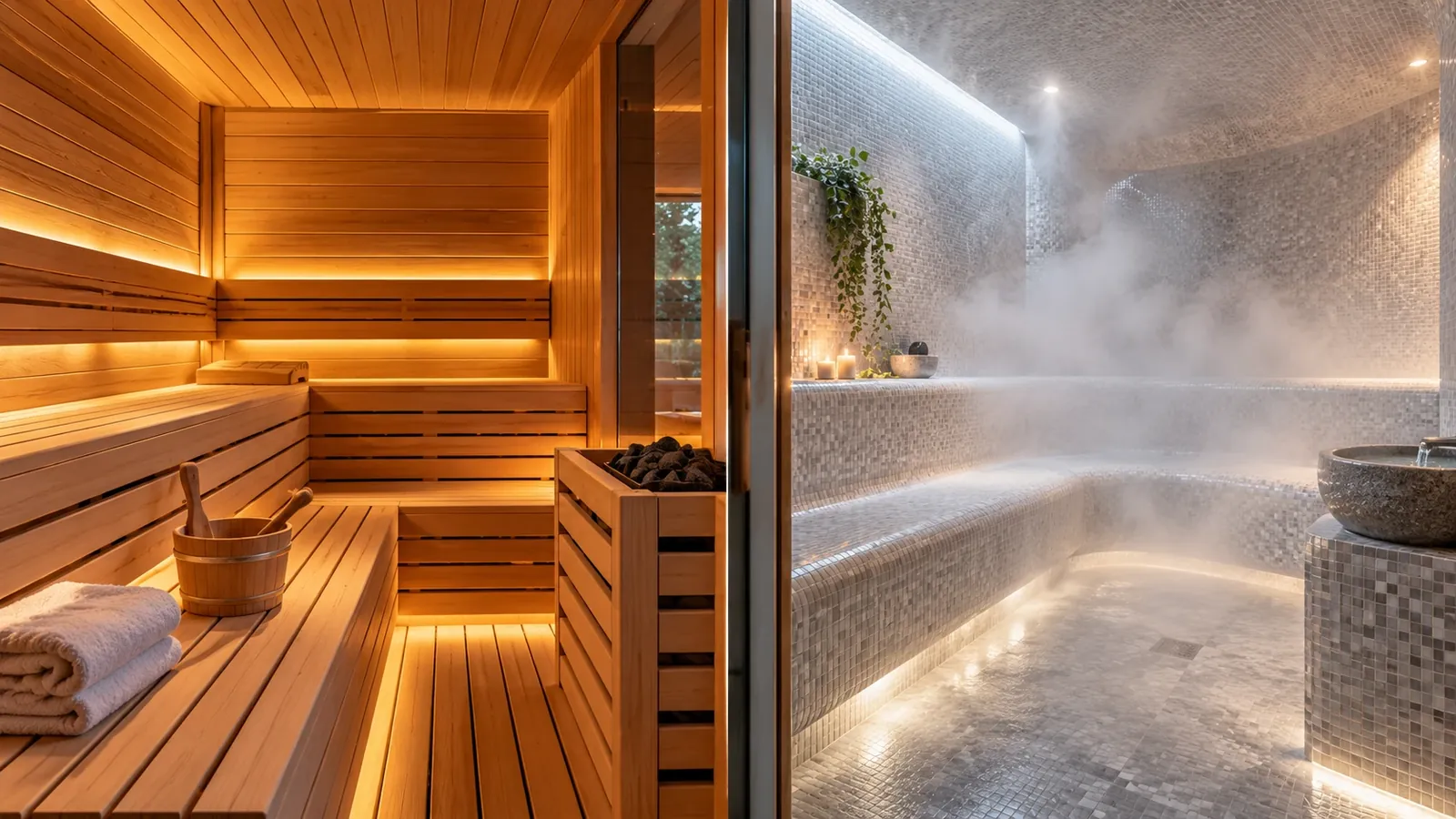
In any sauna vs steam room comparison, both can feel intense, but the environments are not interchangeable. Traditional saunas heat the air in a relatively dry space, while steam rooms combine lower temperatures with very high humidity, changing how the heat feels and how readily sweat evaporates.
The comparison also extends beyond comfort. Research into sauna bathing is more developed than research isolating steam-room use, and some widely repeated claims about detoxification, fat loss and recovery go further than the evidence supports.
For someone choosing a gym amenity or planning a home installation, the relevant questions are heat exposure, safety, upkeep and the purpose of the session. Neither option can be called universally healthier on the basis of current evidence.
Key Takeaways
- Traditional saunas generally operate at much higher air temperatures with relatively low humidity; steam rooms use lower temperatures with saturated or near-saturated air.
- The high humidity of a steam room can make heat feel more oppressive because sweat evaporates less effectively.
- Both environments produce sweating and cardiovascular responses, but sweating is not proof of fat loss or a medical detoxification effect.
- Research connecting frequent sauna bathing with cardiovascular outcomes includes observational studies, which cannot independently prove causation.
- A systematic review of randomised passive-heating trials found no significant pooled improvement for most measured cardiometabolic outcomes.
- Dry sauna and steam-room safety concerns include overheating, dehydration, dizziness and risks for people with certain medical conditions.
- Home installations involve different moisture-control, ventilation, maintenance and operating requirements.
- Personal comfort and appropriate safety precautions are more defensible selection criteria than exaggerated benefit claims.
Sauna vs Steam Room: Comparison at a Glance
The most immediate difference is how the environment delivers heat. A traditional sauna uses a heater and mostly dry air, while a steam room uses a steam generator to maintain very high humidity at a lower temperature.
| Factor | Traditional dry sauna | Steam room |
|---|---|---|
| Typical temperature | About 150–195°F (66–90°C) | Commonly around 110–120°F (43–49°C) |
| Relative humidity | Usually low; can briefly rise when water is added to stones | Very high, commonly approaching 100% |
| Heating method | Hot air, heated surfaces and radiation from a stove | Warm, moisture-saturated air from a steam generator |
| How it feels | Hot and comparatively dry | Warm, dense and humid |
| Sweat evaporation | Generally easier than in saturated air | More restricted by humidity |
| Common venue | Gym, bathhouse, spa, home sauna | Gym, spa, hammam, purpose-built wet room |
| Main maintenance challenge | Heater, wood surfaces and ventilation | Waterproofing, steam generator, drainage and mould control |
| Proven superiority | Neither type established as universally better | Neither type established as universally better |
These temperatures are typical operating ranges, not an instruction to use the upper limit. Actual settings differ by venue, local rules and equipment manufacturer, while infrared saunas form a separate category that generally operates at lower air temperatures.
1. Heat Delivery and Temperature
A traditional sauna often uses an electric or wood-burning heater that warms air and surrounding surfaces. Cleveland Clinic describes conventional sauna temperatures of roughly 150–195°F (66–90°C), although individual facilities may run cooler or hotter.
A steam room operates at a lower displayed air temperature but adds moisture continuously. This changes the experience because humidity affects the body's main cooling mechanism, sweat evaporation, and can make a room feel hotter than the thermometer alone suggests.
Why Air Temperature Does Not Tell the Whole Story
The body transfers heat through several mechanisms, including radiation, convection and evaporation. In dry heat, sweat can evaporate more readily; in highly humid air, evaporation is less effective, making it more difficult to cool through that route.
This does not make one environment automatically more dangerous than the other. Duration, hydration, individual health, room conditions and how someone feels during exposure all influence practical safety.
2. Humidity and Breathing Comfort
A steam room is designed to maintain very high humidity, whereas a conventional sauna usually has relatively dry air. Some users prefer the sensation of moist warmth, while others find the dense air uncomfortable or prefer the more evaporative conditions of a dry sauna.
Humidity may temporarily change how the nose and throat feel, but personal comfort should not be mistaken for treatment of an underlying respiratory condition. A hot humid room can also be unpleasant for people whose symptoms are aggravated by heat or moisture.
Does Steam Clear Congestion Better?
Steam may give some users a temporary sense of comfort, but that experience does not establish that steam rooms treat infections, asthma or chronic respiratory diseases. Evidence for inhaled steam therapies should not be casually transferred to a commercial steam room with different exposure conditions.
Anyone with asthma, chronic lung disease or breathing difficulty should check with their healthcare professional before using either facility. Leave immediately if the environment worsens symptoms, and avoid using steam-room visits as a substitute for indicated treatment.
3. Cardiovascular Responses and the Strength of Evidence
Heat exposure can raise heart rate and increase blood flow toward the skin as the body works to release heat. Harvard Health describes these acute responses in conventional saunas and advises extra caution for people with certain cardiovascular conditions.
Long-term sauna research has sometimes associated frequent use with favourable cardiovascular outcomes. However, association is not proof that the sauna itself caused the difference, especially when users may differ in exercise, income, underlying health and other behaviours.
What Randomised Trials Show
A systematic review and meta-analysis published in 2025 examined 20 randomised controlled trials of passive-heating interventions lasting at least one week. It found no significant pooled effect for most evaluated measures, although whole-body heating produced a modest reduction in systolic blood pressure of about 4 mmHg. Outcomes without a significant effect included several vascular, metabolic and inflammatory outcomes.
The review examined more than one kind of passive heating, so it cannot establish that saunas and steam rooms have identical effects. It does, however, challenge the idea that strong and consistent clinical benefits have already been demonstrated across heat therapies. Our review of peptide research applies the same evidence standard to another popular longevity category.
4. Post-Workout Recovery and Muscle Soreness
Saunas and steam rooms are popular after exercise because heat may feel relaxing following a demanding session. That subjective relief can be worthwhile, but it should be distinguished from proven improvements in tissue repair, muscle growth or next-day athletic performance.
Someone who has just completed intense exercise may already be hot and dehydrated. Adding more heat immediately can increase physical strain, making gradual cooling and adequate fluid intake sensible considerations before using a heated facility.
Which Is Better After Strength Training?
Neither a dry sauna nor a steam room is established as the superior method for restoring muscle function after lifting. Exercise-recovery studies vary by exposure duration, temperature, timing and the outcomes measured, making confident universal recommendations inappropriate.
If heat use is comfortable and medically appropriate, treat it as an optional recovery ritual rather than a necessary training intervention. Sleep, nutrition, training load and sensible progression still need independent attention. Wearable recovery scores, compared in our WHOOP vs Oura guide, are trend indicators rather than proof that recovery is complete.
5. Weight Loss and Sweating Claims
Both environments can cause noticeable sweating and temporary changes in body weight. Those changes are primarily related to fluid loss rather than a meaningful reduction in body fat, and the weight will largely return when normal hydration is restored.
Cleveland Clinic explicitly cautions against using sauna sessions as a fat-loss method. Neither heavier sweating nor a longer session proves that more calories or fat have been burned to a clinically important degree.
Does More Sweat Mean Better Detoxification?
The word detox is often used in sauna and steam-room marketing without a clearly defined substance, measurement or medical outcome. The liver and kidneys perform essential waste-processing functions, and a session's sweat volume is not a validated measure of toxin removal.
Claims that a steam room removes more toxins than a dry sauna because someone sweats differently should therefore be treated skeptically. Any specific detoxification claim needs evidence identifying the substance, measured elimination and meaningful health effects.
6. Skin Feel and Personal Comfort
Steam can leave skin feeling moist during a session, while the lower humidity of a dry sauna produces a different sensation. Neither experience automatically establishes improved skin health, treatment of acne or better long-term hydration of the skin barrier.
Heat and sweating may also aggravate symptoms for some people, depending on their skin condition and individual sensitivity. Personal experience should guide comfort, but product-style claims of skin rejuvenation require separate clinical evidence.
What About Sensitive Skin?
People prone to flushing, dizziness or heat-triggered discomfort may find either environment unsuitable at certain temperatures. Steam rooms also introduce high ambient moisture, which is not necessarily comfortable for everyone with sensitive skin.
If a condition is aggravated by heat, consult an appropriate clinician rather than experimenting with increasingly long sessions. For general comfort, follow facility guidance, avoid harsh scrubbing immediately afterward and stop if irritation occurs.
7. Safety, Duration and Hydration
Both saunas and steam rooms produce substantial heat exposure, making dehydration, dizziness and overheating important practical risks. Harvard Health advises keeping sauna sessions short, avoiding alcohol, cooling down gradually and leaving promptly if someone feels unwell.
Cleveland Clinic advises avoiding saunas after a recent heart attack or stroke, and recommends checking with a healthcare provider first for certain heart or blood-pressure conditions, pregnancy, some neurological conditions and relevant medication use. A clinician can advise whether heat exposure is appropriate for an individual medical history.
A Conservative Safety Checklist
A short visit is not a challenge to be endured, and facilities may have their own stricter posted limits. Before entering, consider the following safeguards:
- Hydrate appropriately: Replace fluids lost during exercise and heat exposure, according to your own health needs.
- Start conservatively: New users should choose shorter exposures rather than aiming for the maximum posted duration.
- Avoid alcohol: Alcohol can impair judgment and increase heat-related risk.
- Leave when symptoms appear: Dizziness, chest discomfort, unusual weakness, nausea or difficulty breathing are reasons to stop immediately.
- Follow clinical advice: People with relevant medical conditions or medications should not rely on general wellness instructions.
For a traditional sauna, Harvard Health discusses a general maximum of 15–20 minutes for otherwise appropriate users, but this is not a universal safe duration for everyone or every steam room. Facility rules and personal medical advice take precedence over generalized timing suggestions.
8. Cost, Maintenance and Home Installation
A gym member comparing existing facilities might only need to decide which environment feels better, and many wellness retreats in the US offer both. A homeowner or wellness operator faces additional questions about space, building services, moisture management, cleaning and professional installation.
Traditional saunas and steam rooms have different infrastructure requirements, so an advertised equipment price is not an all-in installation cost. Electricity, waterproofing, ventilation, plumbing, cleaning and local codes may all affect the final investment.
Dry Sauna: Heater and Ventilation Requirements
A traditional sauna generally requires a suitable enclosure, heat-resistant materials, a correctly installed heater and appropriate ventilation. Installation requirements vary across electric, wood-burning and modular systems, and a qualified installer should confirm suitability for the building.
Wood surfaces, benches and heaters also need regular maintenance. A sauna may require less room-wide moisture protection than a steam room, but it is still a high-heat installation that needs proper planning.
Steam Room: Waterproofing and Moisture Control
Steam rooms need surfaces and building details designed to manage persistent high humidity and condensation. A steam generator, moisture-resistant enclosure, drainage and adequate ventilation may be necessary to keep the installation functional and limit moisture damage.
Maintenance can include cleaning the steam system and managing mineral scale, especially where water is hard. Neglecting moisture control can create building problems independent of any benefits users perceive from the experience.
Sauna vs Steam Room: Which Should You Choose?
Choose based on comfort, access, safe operating conditions and the type of experience you want. A traditional sauna is more appropriate for someone who prefers dry, hotter air, while a steam room may appeal to people who prefer a warm, moisture-saturated environment.
Do not choose either solely because a venue promises detoxification, rapid fat loss or guaranteed recovery benefits. The current research does not support naming one as universally superior, and personal medical circumstances can make both unsuitable.
FAQs
Is a Sauna Healthier Than a Steam Room?
There is not enough direct comparative evidence to conclude that a sauna is universally healthier than a steam room. Traditional sauna bathing has a larger body of published observational research, but that does not establish its superiority for every clinical outcome or individual user.
Which Is Better After a Workout, Sauna or Steam Room?
Neither is conclusively better for post-workout recovery. Both provide heat exposure and may feel relaxing, but evidence for superior muscle repair or performance outcomes remains limited. Someone who is already overheated or dehydrated should cool down and replace fluids before considering either option.
Does a Steam Room Burn More Calories Than a Sauna?
A steam room can increase heat stress and sweating, but that does not establish a meaningful advantage for fat loss over a sauna. Temporary weight changes after either session mainly reflect fluid loss, not lasting body-fat reduction, and normal hydration usually reverses them.
Is a Steam Room Better for Congestion?
Some people find warm humid air temporarily comfortable, but a steam room is not an established treatment for respiratory infections or chronic lung conditions. Hot humid environments can also worsen symptoms for some people, so anyone with breathing problems should seek appropriate clinical advice.
How Long Should Someone Stay in a Sauna or Steam Room?
There is no single duration that is safe for every person or facility. Harvard Health gives general sauna precautions including sessions no longer than 15–20 minutes, but beginners and people with health concerns may need less exposure or medical guidance. Follow posted rules and leave if unwell.
Does Sweating in a Sauna Remove Toxins?
Sweat does not provide a reliable measure of detoxification or medical benefit. Claims about removing toxins must identify the substances involved and demonstrate meaningful elimination and outcomes, rather than relying on the amount a person sweats during heat exposure. Normal liver and kidney function remains central to waste processing.
The Evidence Favors a Careful Comparison
Saunas and steam rooms differ most clearly in air temperature, humidity and the practical experience of exposure. Claims about long-term cardiovascular benefits, exercise recovery and skin health require greater care, especially when results from observational studies are presented as proven effects.
For gyms and wellness operators, safe facilities, transparent operating information and proper maintenance are more defensible selling points than unsupported health promises. For individuals, comfort and medical suitability should guide the choice.
Sources and Research Notes
- Cleveland Clinic: Sauna Benefits: conventional and infrared temperature ranges, steam distinction, weight-loss claims and cautions.
- Harvard Health: Saunas and Your Health: physiological responses and general precautions; archived clinical article.
- 2025 systematic review of randomised passive-heating trials, PubMed: cardiometabolic outcomes in trials lasting 2 to 15 weeks, and limitations.
- 2026 narrative review of bathing and sauna practices, PubMed: observational associations, mechanisms and evidence gaps.
- SaunaSpots: Sauna vs Steam Room: operational comparison used only for general temperature/humidity context, not as clinical proof.
Editorial methodology: Reviewed published medical guidance and research summaries on October 18, 2026. The article is educational, not personal medical advice. The main evidence base is stronger for some traditional sauna practices than for direct steam-room comparisons; causality and generalisability should not be overstated.
Affiliate disclosure: No affiliate links are included in this article.