VO2 max is the most oxygen your body can use during all-out exercise. It's one of the best single measures of heart and lung fitness. But a number from a lab treadmill test and a number from your watch aren't the same thing, and the reference group matters as much as the unit.
The best US source for average VO2 max by age is the FRIEND registry, short for the Fitness Registry and the Importance of Exercise National Database. Its 2015 reference study pooled measured treadmill tests from 4,611 men and 3,172 women. That beats the unsourced "excellent, good, poor" charts copied between websites.
Here are the measured averages and how to read them.
Average VO2 Max by Age and Sex
These are FRIEND's mean values from treadmill tests with measured oxygen use, in milliliters of oxygen per kilogram of body weight per minute (mL/kg/min).
| Age | Men, mean | Women, mean |
|---|---|---|
| 20 to 29 | 47.6 | 37.6 |
| 30 to 39 | 43.0 | 30.9 |
| 40 to 49 | 38.8 | 27.9 |
| 50 to 59 | 33.8 | 24.2 |
| 60 to 69 | 29.4 | 20.7 |
| 70 to 79 | 25.8 | 18.3 |
| All ages | 37.9 | 27.6 |
These are averages from people who had exercise tests, not a random sample of all US adults.
What the Age Pattern Shows
Average VO2 max is lower in each older age group. For men, the 60 to 69 group averaged 18.2 points below the 20 to 29 group. For women, the gap was 16.9 points.
Those are differences between age groups, not how much one person loses with age. FRIEND is a snapshot of different people at different ages, not the same people followed over decades. Training habits, health and who gets tested all shape the comparison.
Average and Median Aren't the Same
Many sites call the 50th percentile "the average." The mean adds up every result and divides by the number of people. The median is the middle value. FRIEND reports both, and they differ.
| Age | Men, mean | Men, median (50th percentile) |
|---|---|---|
| 20 to 29 | 47.6 | 48.0 |
| 40 to 49 | 38.8 | 37.8 |
| 60 to 69 | 29.4 | 28.2 |
The gaps are small here, but they matter when you see a chart without labels. Fitness varies widely within each age group, so a trained runner and an inactive adult of the same age can sit far apart.
Treadmill and Bike Tests Can Disagree
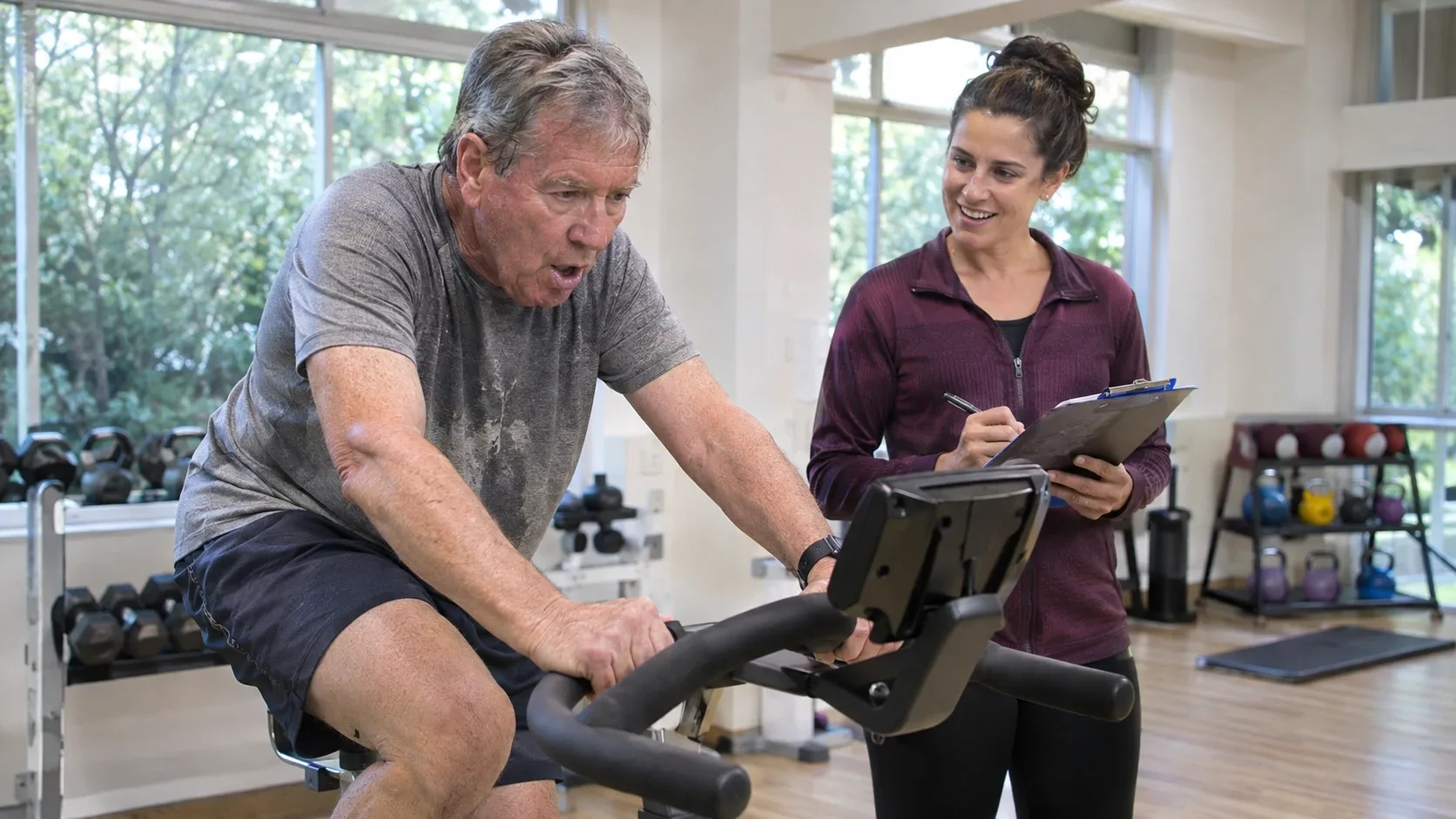
Different exercise tests use your muscles differently. On a bike, many people stop because their legs tire before their heart and lungs max out. FRIEND's table uses treadmill tests only. Compare a bike test with bike-specific norms rather than this table.
Can a Smartwatch Measure VO2 Max?
Not directly. Many watches estimate VO2 max from heart rate, pace and other data rather than measuring the oxygen you breathe out. That can be useful for spotting trends, but the number depends on the watch's formula and the workouts it recorded.
A watch score of 40 isn't the same as a lab-measured 40 unless that watch has been validated against lab tests in people like you. Our Garmin vs Fitbit comparison covers how two popular brands handle fitness estimates.
Reading Changes in Your Number
VO2 max is usually reported per kilogram of body weight. So if your weight changes, your VO2 max number can change even if your heart and lungs haven't. Training, health, the test used and sensor accuracy all play a part too.
Fitness can also improve in ways VO2 max doesn't capture. Better pacing, running economy and endurance can show up in your times before a watch updates its estimate. To track effort during training, the Heart Rate Zone Calculator turns your age into heart rate zones. Our average heart rate by age guide explains how maximum heart rate is estimated.
How to Raise Your VO2 Max
Regular aerobic exercise is the main route. US guidelines call for at least 150 minutes of moderate or 75 minutes of vigorous activity a week. Mixing in harder intervals pushes your heart and lungs closer to their limit. For how stair climbing compared with running in one training trial, see our StairMaster vs treadmill guide. For how many Americans are active at each age, see our fitness statistics.
FAQs
What Is a Good VO2 Max for My Age?
Compare your result with a reference group that used the same type of test, for your age and sex. In FRIEND's treadmill data, men in their 40s averaged 38.8 mL/kg/min and women 27.9. A percentile shows where you sit in that group, but it isn't a health diagnosis.
Does VO2 Max Always Decline With Age?
Average VO2 max is lower in older age groups, but that doesn't predict every person's path. Training and health shape individual fitness. Snapshot data like FRIEND compares different people at different ages, so it can't show how fast one person changes.
Are Apple Watch and Garmin VO2 Max Readings Accurate?
They're estimates from a formula, not direct measurements of the oxygen you breathe. How useful they are depends on the device's validation, your recorded workouts and signal quality. A lab cardiopulmonary exercise test is the direct measure when you need precision.
Is a Higher VO2 Max Always Better?
A higher VO2 max generally means stronger heart and lung fitness, but it isn't a stand-alone health verdict. A fair comparison needs your age, sex, body weight, the test used and your wider health picture.
Sources
- Kaminsky LA et al., Reference Standards for Cardiorespiratory Fitness Measured With Cardiopulmonary Exercise Testing: Data From the FRIEND Registry, Mayo Clin Proc 2015. Tables 2 to 4.
- CDC, Adult Activity: An Overview.
- US Department of Health and Human Services, Physical Activity Guidelines for Americans, 2nd edition.
The 18.2 and 16.9 point gaps were calculated from FRIEND's published means. This article gives general information, not medical advice.